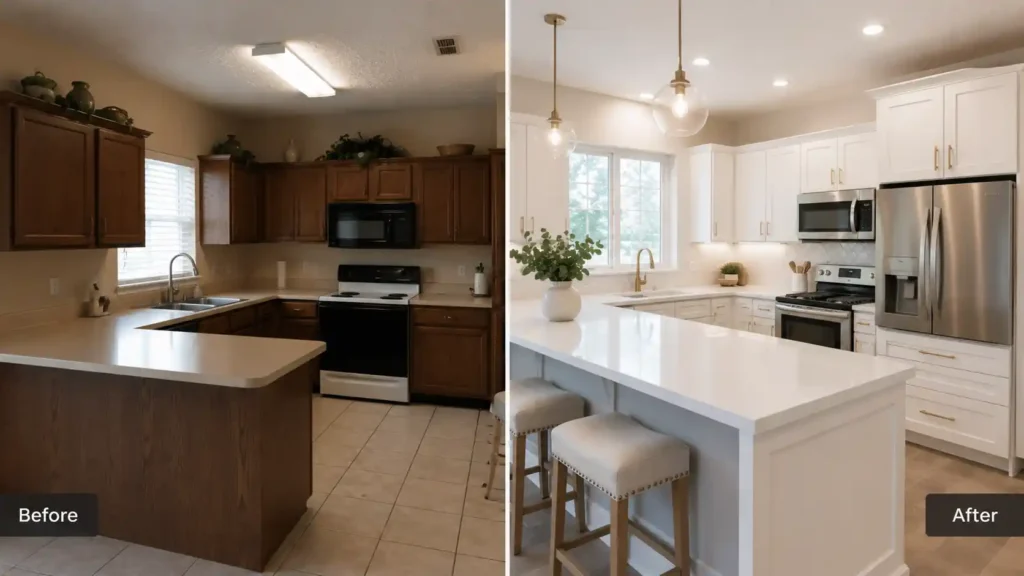





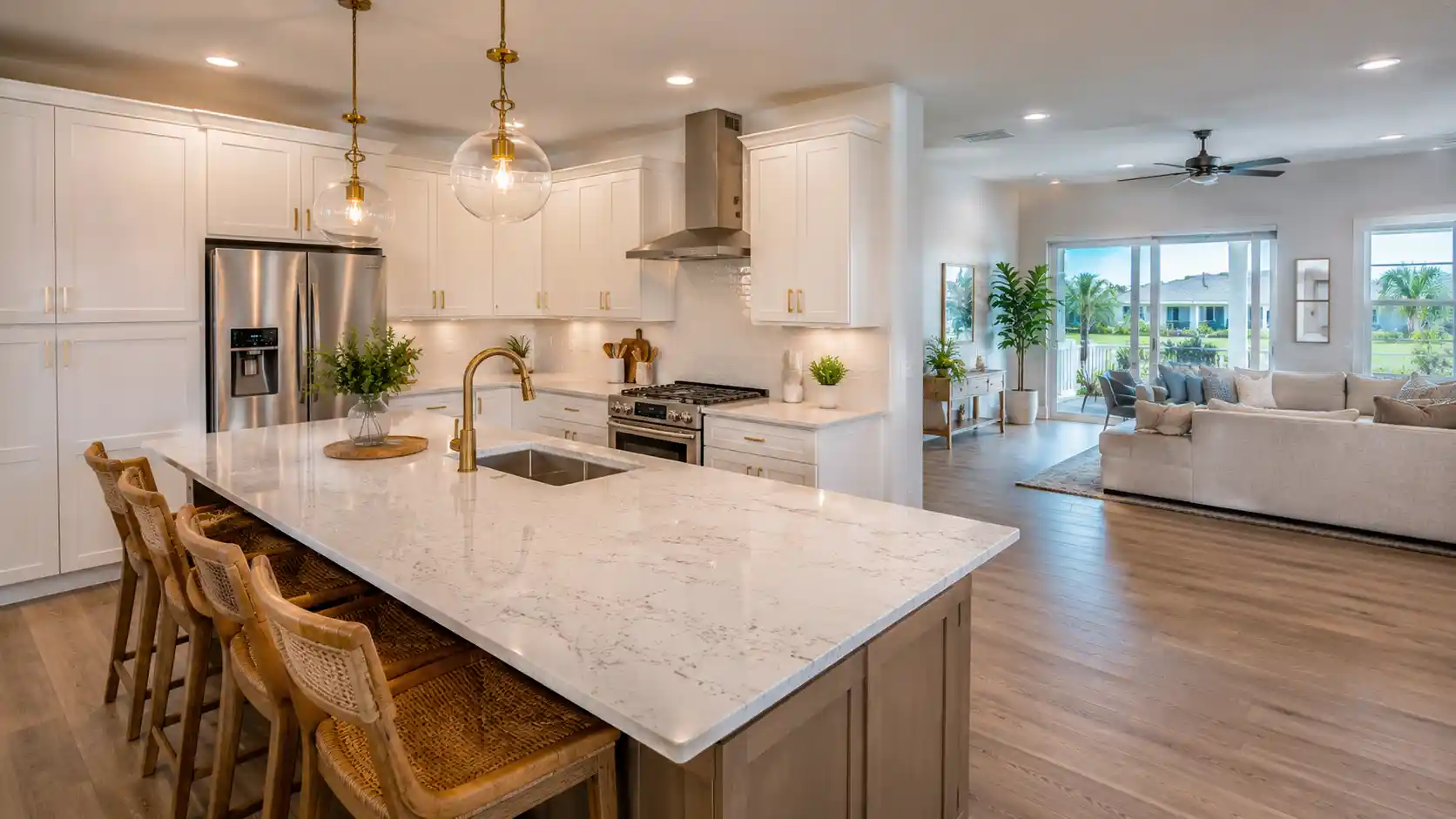

How to plan a kitchen remodel when replacing cabinets, countertops, and flooring. A kitchen remodel is exciting, but it can also get confusing fast. Homeowners often start by choosing the countertop they love, then realize the cabinets, flooring, layout, backsplash, plumbing, and installation timing all affect the final result. When several trades are involved, the order of work matters just as much as the materials you choose.
If you are replacing cabinets, countertops, and flooring at the same time, the goal is simple: create a clear plan before anything is removed. That way, your project moves in the right order, mistakes are easier to avoid, and the finished kitchen looks intentional instead of pieced together.
Start With the Layout, Not the Stone
Many homeowners fall in love with a quartz, granite, marble, or porcelain slab first. That is understandable. Countertops are one of the most visible parts of the kitchen. But before choosing the exact material, you need to know whether your layout is changing.
Are you keeping the same cabinet footprint? Moving the sink? Adding an island? Widening a walkway? Extending the countertop overhang for seating? These decisions affect cabinet sizing, countertop square footage, seams, plumbing, electrical work, flooring cuts, and installation timing.
A beautiful countertop cannot fix a layout that does not work for your family. Start with how you use the kitchen every day. Think about cooking space, storage, traffic flow, where kids sit, where small appliances live, and whether you need more prep room.
Cabinets Usually Come Before Countertops
In most kitchen remodels, cabinets need to be installed before the final countertop template happens. The countertop must be measured from the real installed cabinet layout, not from a guess on paper.
Even small cabinet shifts can change countertop measurements. If the cabinets are not level, secure, or properly placed, the stone installation may be affected. This is why cabinet planning is so important. The countertop depends on the cabinet base beneath it.
If you are choosing semi-custom or custom cabinets, confirm the cabinet style, finish, hardware, storage features, and installation schedule before finalizing the countertop timeline. Once cabinets are installed, the countertop team can template the space accurately.
Flooring Should Be Planned Early
Flooring can create one of the biggest scheduling questions in a kitchen remodel. In some projects, flooring goes in before cabinets. In others, cabinets are installed first and flooring is placed around them. The right choice depends on the flooring material, cabinet plan, subfloor condition, and whether the kitchen layout is changing.
For example, luxury vinyl plank, tile, laminate, and hardwood can each require a different approach. Moisture, transitions, appliance clearances, and floor height all matter in Florida homes. If the new floor raises the height, you may need to consider dishwasher clearance, toe-kick height, transitions into nearby rooms, and how the finished floor meets existing surfaces.
The key is to decide early. Flooring should never be treated as an afterthought because it affects the finished look of the entire kitchen.
Choose Materials That Match Your Lifestyle
A kitchen that looks beautiful on day one should also work for your daily life. Busy families often prefer low-maintenance quartz. Homeowners who love natural movement may choose granite or marble. Outdoor kitchens and sun-exposed areas require a different conversation, especially in Florida, where UV exposure and moisture matter.
Cabinet finishes should also match how you live. White cabinets are bright and timeless, but darker lower cabinets can hide everyday wear. Wood tones can warm up a space. Flat-panel doors feel modern, while shaker styles work in both traditional and transitional homes.
Flooring should be chosen with pets, kids, water, cleaning habits, and traffic in mind. A showroom visit is helpful because samples look different in person than they do online.
Coordinate the Trades Before Demo Starts
One of the biggest remodel frustrations happens when each trade works separately with no clear schedule. Cabinets are delayed. Countertop templating gets pushed back. Flooring needs prep work no one planned for. The homeowner ends up trying to coordinate everything.
Working with one team for cabinets, countertops, and flooring can make the process smoother. It gives you a single point of accountability and helps the sequence stay organized from estimate to final walkthrough.
Plan for Realistic Timing
A full kitchen remodel is not instant. Even when the design is simple, each step takes time: estimate, selections, cabinet ordering, demo, cabinet installation, countertop template, fabrication, countertop installation, flooring, finishing touches, and final cleanup.
The best projects are not rushed. They are planned well. When homeowners understand the order of work upfront, the process feels less stressful.
Bring the Whole Design Together
Your cabinets, countertops, and flooring should feel like they belong in the same home. The colors do not have to match perfectly, but they should work together. Bring cabinet samples, flooring samples, and countertop ideas into the same conversation before making final decisions.
At J&A Stone Designs, Polk County homeowners can compare materials in person, discuss the full project, and plan cabinets, countertops, and flooring with one coordinated team. If you are starting a kitchen remodel in Lakeland, Auburndale, Winter Haven, Bartow, Haines City, Davenport, Lake Alfred, Plant City, or nearby Central Florida communities, a free on-site estimate is the best place to start.