
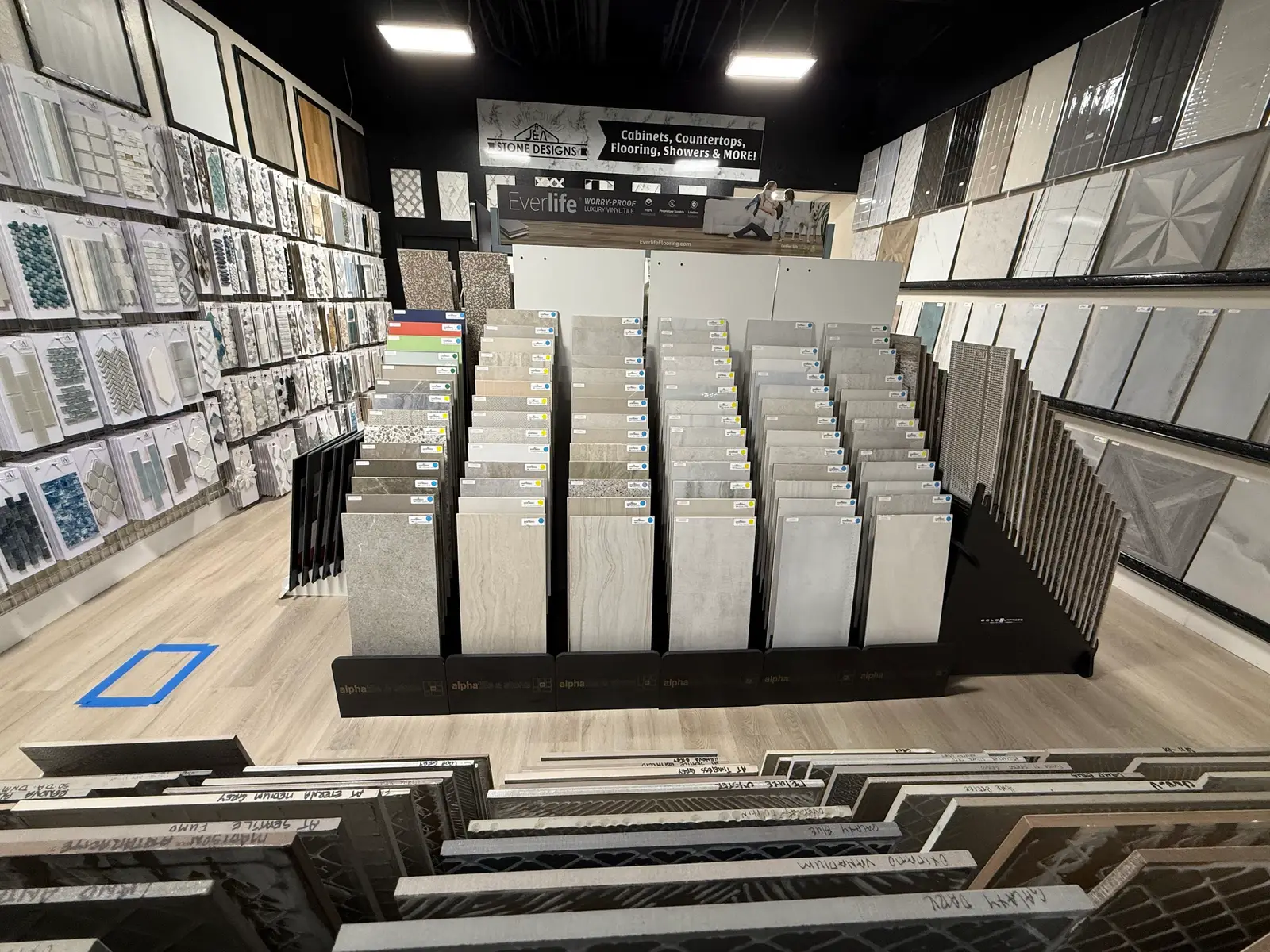
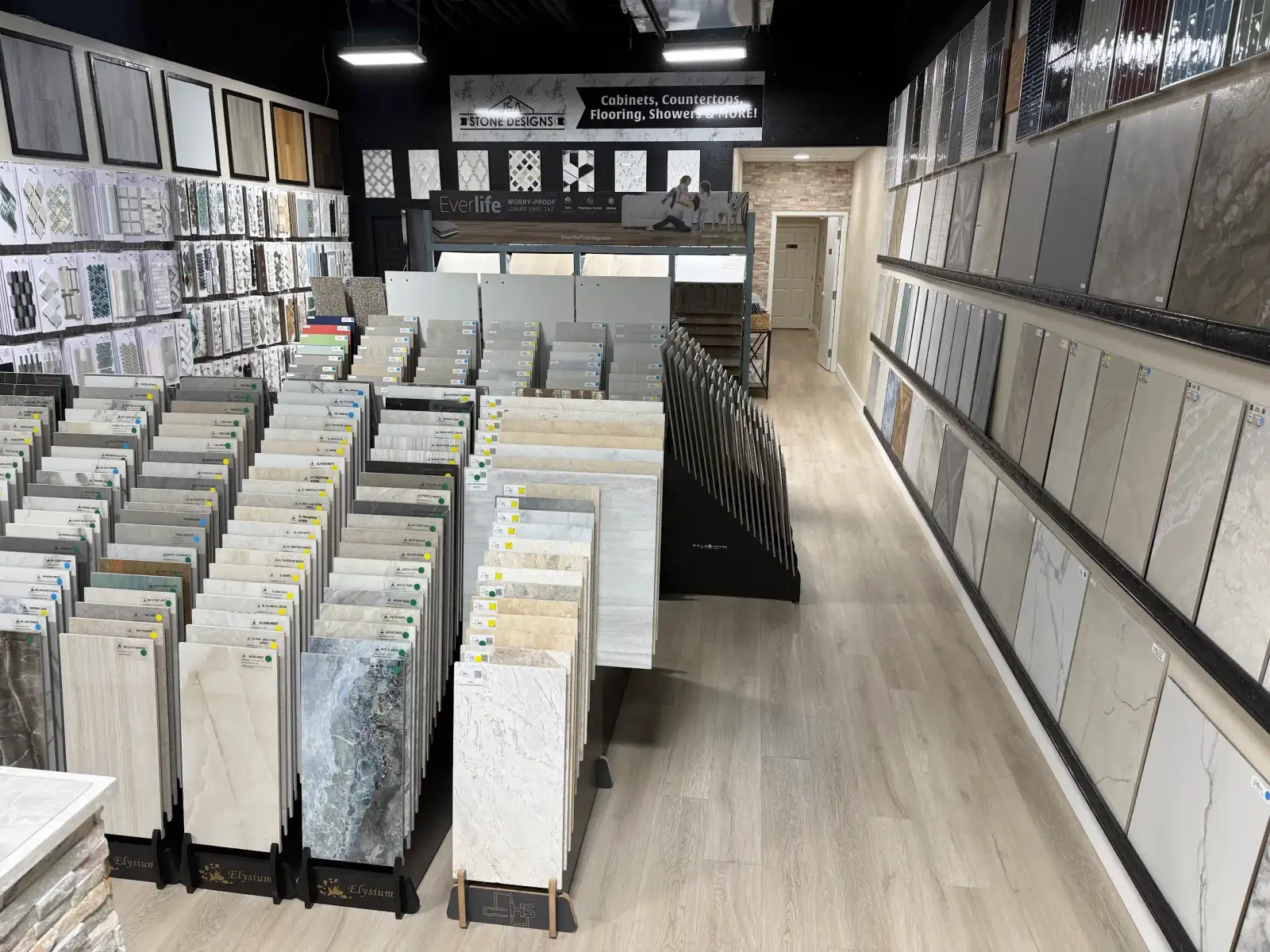
Lakeland
5259 Florida Ave S, Lakeland, FL 33813 Mon-Fri 8:00 AM - 4:00 PM · Sat-Sun closed- Luxury vinyl plank, tile, hardwood and laminate
- Flooring installation and repair
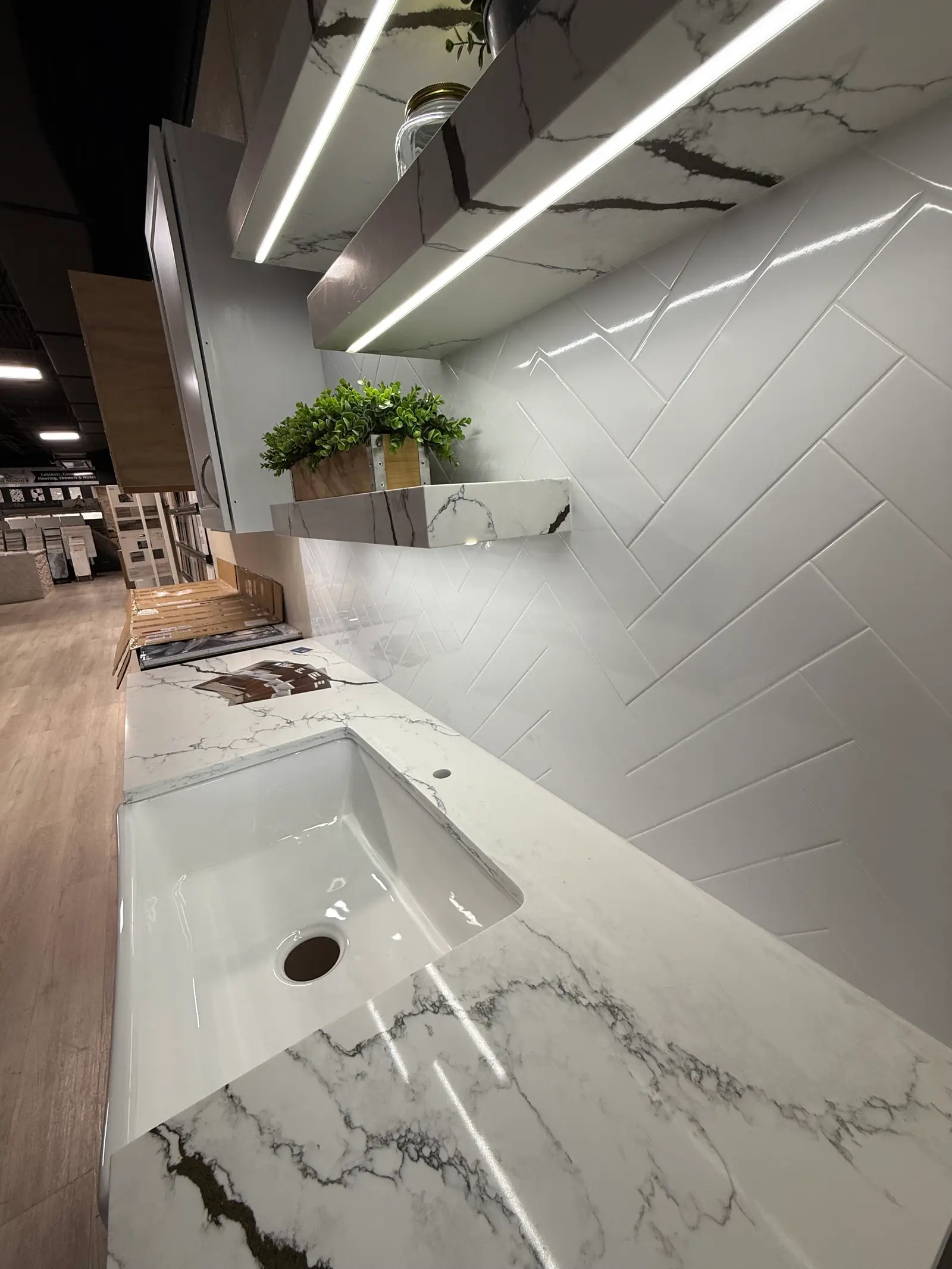
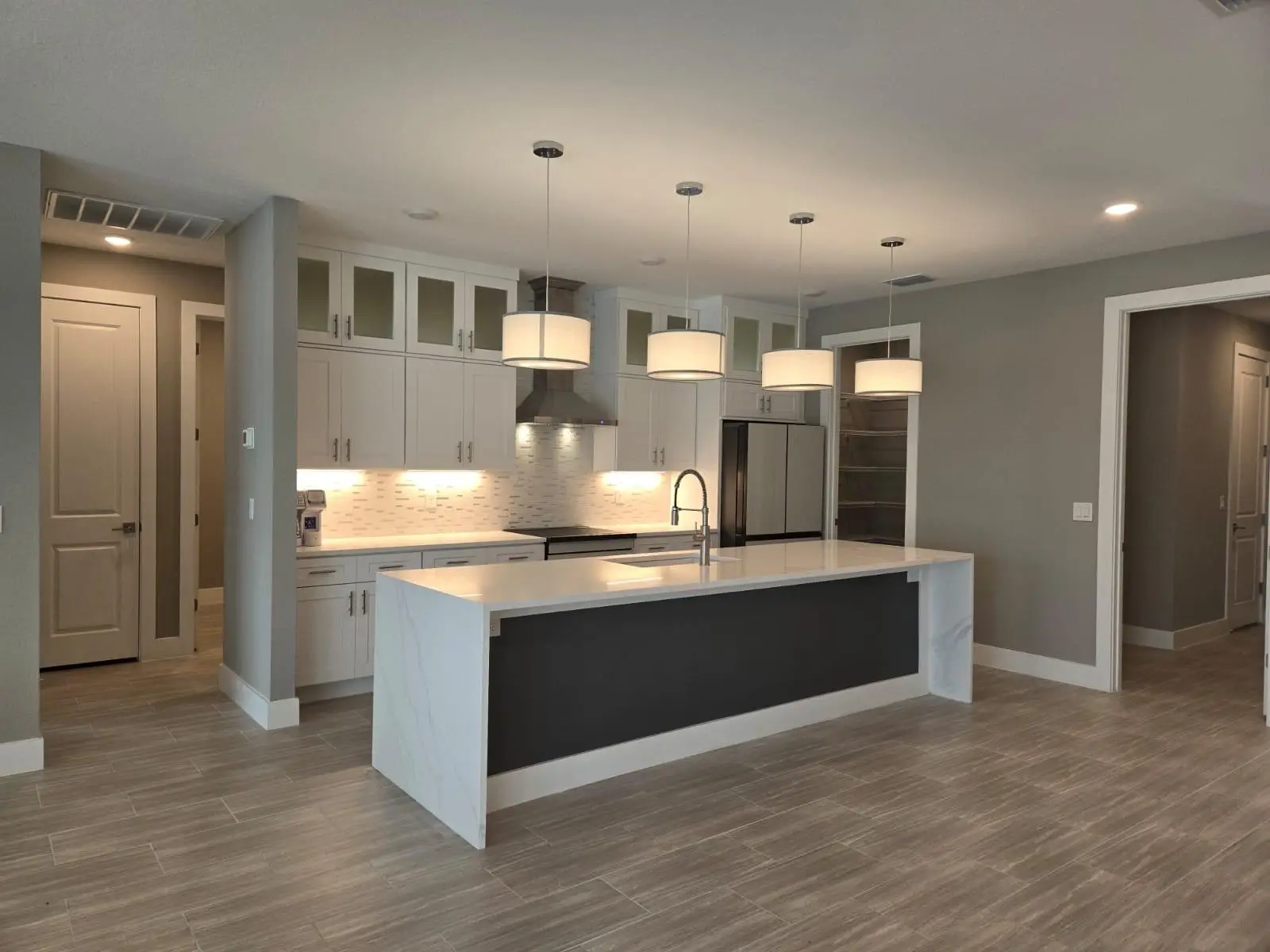
- Cabinet displays and countertop selection
Porcelain and ceramic tile flooring for bathrooms, kitchens, laundry rooms and covered lanais. Properly installed tile lasts decades with minimal maintenance.
Lakeland flooring showroom: 5259 Florida Ave S, Lakeland · Mon-Fri 8-4

Tile done poorly fails predictably: cracked grout, popped tiles, water reaching the subfloor. Done correctly, the same installation lasts 30 years or more. Our installers handle proper subfloor preparation, isolation membrane where required, correct mortar selection and proper grout joint sizing.
For Florida floors, porcelain beats ceramic in most cases: a denser body, lower water absorption, better resistance to thermal shock and better wear in high-traffic areas. The cost difference between premium ceramic and basic porcelain is small, so we default to porcelain unless there is a specific reason otherwise.
Lines we carry: Alpha Tile & Stone · Keystone · Elysium · Everlife by MSI
The porcelain body is essentially waterproof, and grout joints are the only path for water. We seal all grout at install and give you a resealing schedule, typically every 1 to 3 years.
Tile shrugs off dropped pots, dragged furniture and direct heat. Damage is rare and isolated when it does happen.
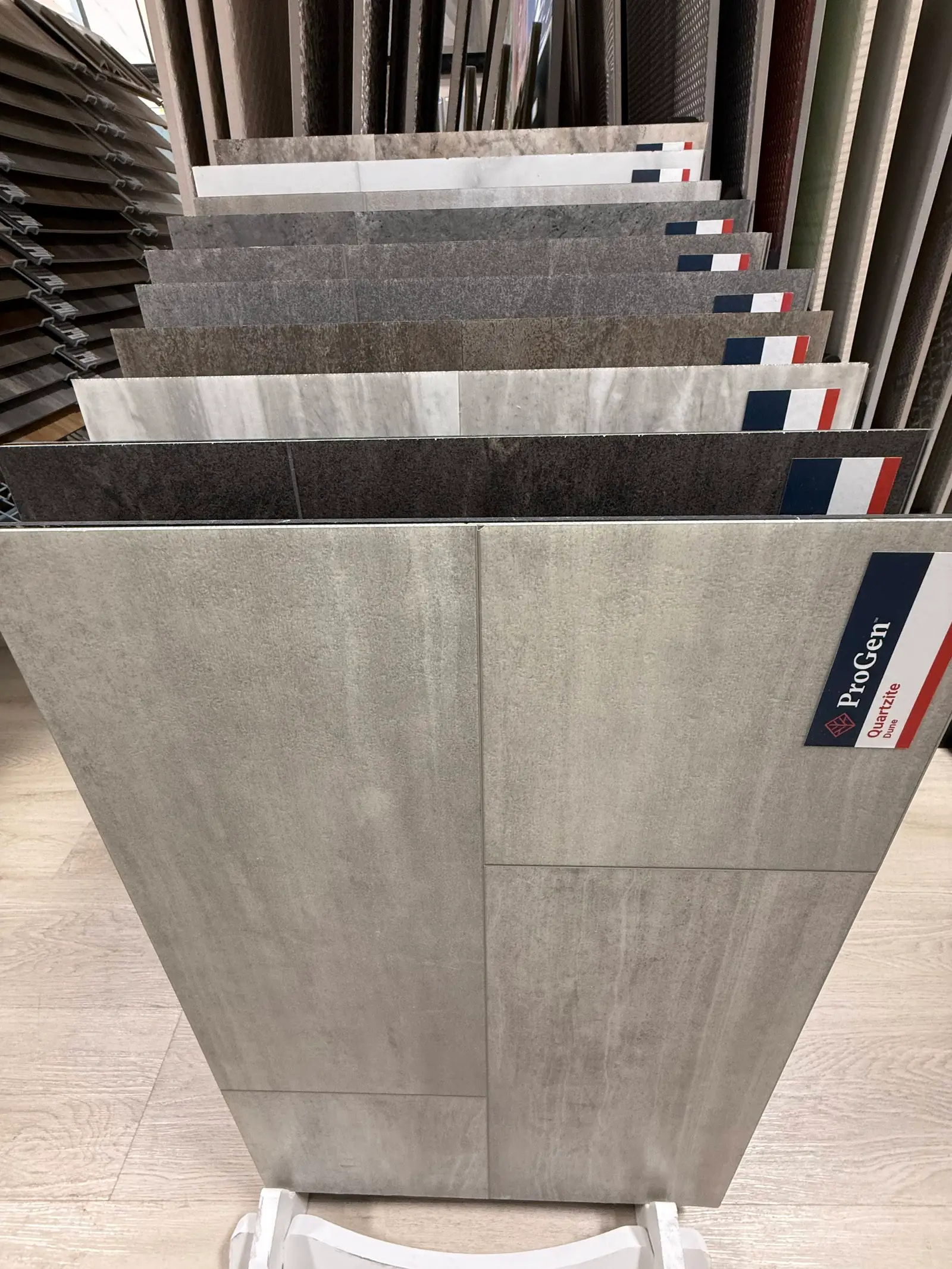
Wood-look planks, marble-look slabs, geometric patterns and large-format panels are all available.
Water absorption under 0.5 percent. Our default for floors, lanais, kitchens and high-traffic areas.
Water absorption of 3 to 7 percent. Right for shower walls, backsplashes, decorative patterns and lower-traffic indoor floors.
UV exposure, humidity swings and occasional rain ruin most flooring categories. Porcelain is not affected.
Estimated installed range
Financing from $500 to $25,000 through Wisetack, 3-60 months for qualified buyers. Details
Get my exact quoteInstalled ranges per square foot, as published on this site. Your written quote follows a free on-site measure.
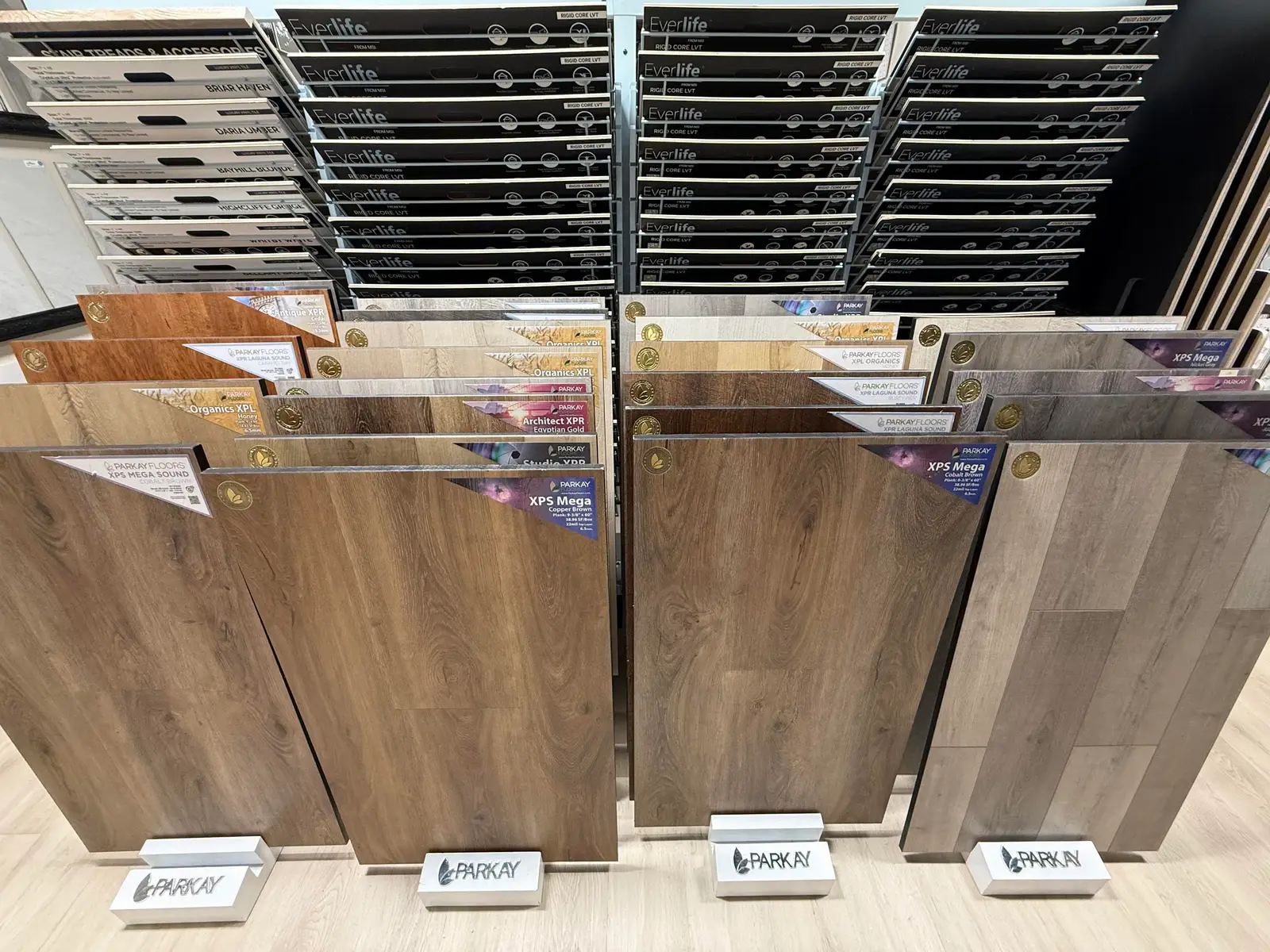
Compare LVP, tile, hardwood and laminate samples side by side. Bring photos of the rooms you are renovating.
We measure square footage, inspect the subfloor and run a moisture test before quoting.
The final decision happens with samples in your home, so you see colors under your own lighting.
Removal of existing flooring, subfloor leveling and moisture barrier installation. The single biggest factor in how a floor performs long-term.
Installed to manufacturer specifications. Most rooms complete in one to two days.
We walk every transition, threshold and corner with you and hand off a care guide for your material.
Porcelain has a denser body (under 0.5 percent water absorption) than ceramic (3 to 7 percent). Porcelain is better for floors, exterior applications and high-traffic areas. Ceramic suits wall tile and lower-traffic indoor floors. For flooring we default to porcelain.
Every 1 to 3 years depending on use. For heavy-traffic bathroom and kitchen floors, lean toward every year. For low-traffic areas, every 2 to 3 years is enough. Unsealed grout absorbs water and discolors over time.
Most bathroom installations take two to four days, including subfloor prep, setting, mortar cure, grouting and grout cure. Kitchens and large areas run four to seven days. The cure times between stages are not something we rush.
Properly installed tile rarely cracks. The most common cause is movement in the subfloor, either flex in a wood subfloor or settling in a concrete slab. We assess the subfloor and add an isolation membrane where movement is likely.
Yes, and it is one of the easier installations. A slab is rigid, and tile bonds directly to it with the right mortar. We test the slab for moisture and flatness first. Most Polk County slab homes are excellent candidates for tile.
Large-format tiles (12 x 24, 24 x 24, 24 x 48) minimize grout lines in modern kitchens and bathrooms. For shower floors and small bathrooms, smaller tiles (2 x 2 mosaic, 4 x 4) give better slip resistance and easier sloping to the drain.
Yes. Electric radiant heat mats go between the substrate and the tile. Florida homeowners most often add them in master bathrooms and entryways.