Textured countertops are stone or quartz surfaces finished without the mirror shine of a polished slab. The three finishes most homeowners ask about are honed, which is flat and matte; leathered, which is matte with a soft, rippled feel you can run your hand across; and brushed, which sits between the two with a light texture. Each one changes how the counter looks, how it feels, how it hides fingerprints and how much care it needs.
If you have already read our piece on why textured stone finishes are catching on, this guide goes one step further. It puts the finishes side by side so you can pick the one that fits the way your kitchen or bathroom is actually used.
How Each Finish Is Made
Every natural stone slab starts rough and is ground smooth with progressively finer abrasives. Where the fabricator stops, and what tools come next, decides the finish.
Polished
A polished slab is taken through the finest grits until the surface reflects light. It is the finish most people picture when they think of granite or marble, and it is still the most common in American kitchens. Polishing closes the surface up as tightly as that stone allows, which is why polished stone tends to resist staining best of the three natural stone options.
Honed
A honed finish stops before the final polishing steps. The surface is flat and smooth to the touch, but it has little or no shine. The Natural Stone Institute’s consumer site describes honed as “the original matte-type surface” for countertops. Because light is not reflected straight back, the stone’s pattern reads softer and calmer.
Leathered
A leathered finish starts as a honed surface. The stone is then worked with diamond-tipped brushes of different grits that wear away the softer minerals and leave small ridges across the face, according to a Use Natural Stone guide to textured surfaces. The result has a low sheen and a gentle, uneven texture that follows the stone’s own grain. It is most often seen on granite and quartzite, which have a mix of hard and softer minerals for the brushes to pick out.
Brushed
A brushed finish uses a similar brushing process but leaves fewer ridges than leathering. You get a matte look with a light texture, a little like a worn stone step. It is less common than honed or leathered on countertops, so if you like it, ask early which slabs can be brushed.
How They Compare in Everyday Use
Here is how the three textured finishes behave once the counter is in and the family is using it.
Fingerprints, smudges and water spots
- Polished: shows fingerprints, streaks and water spots most, especially on dark stone under kitchen lights.
- Honed: hides glare and streaks well, but oils from hands and cooking can leave darker patches until wiped.
- Leathered: the texture breaks up light, so smudges and water spots are the hardest to see.
- Brushed: similar to leathered, slightly more like honed because the texture is lighter.
Scratches and wear
On a polished surface, a fine scratch catches the light and stands out. Textured finishes do not have that mirror for scratches to interrupt. The Use Natural Stone guide notes that leathered and brushed finishes are less likely to show scratches from normal wear. Honed stone sits in the middle.
Stains
This is where the trade-off sits. Grinding off the polish opens the surface slightly, so a honed stone generally takes in liquid a little more readily than the same stone polished. Leathered stone falls between the two; the Use Natural Stone guide says leathered stone is more stain resistant than honed. A good sealer, applied and kept up, does most of the work of protecting any natural stone, whatever the finish.
Cleaning
Flat finishes, polished and honed, wipe clean in one pass. Leathered and brushed surfaces have tiny valleys where crumbs and flour can settle, so a soft brush or a microfiber cloth works better than a sponge. Mild dish soap and warm water are enough for daily cleaning on all of them. Skip vinegar, lemon and harsh cleaners on natural stone; acids can dull or etch some stones, and strong chemicals can wear down a sealer over time.
Granite, Marble and Quartz: Which Materials Take Which Finish
Granite and quartzite
Granite countertops are the most common choice for a leathered finish. The hardness of the stone holds up well to the brushing, and the texture brings out depth in the pattern. Granite can also be honed. Like any granite, a honed or leathered top should be sealed and resealed periodically as part of normal care.
Marble
Marble is softer and more sensitive to acids than granite. A honed finish is popular on marble because etching, the dull marks left by lemon juice, wine or acidic cleaners, blends in far better on a matte surface than on a polished one. Leathered marble exists but is less common. Marble in any finish needs more care than granite or quartz.
Quartz
Quartz is engineered, so its surface finish is set when the slab is manufactured, not brushed in afterward by the fabricator. Some quartz lines are made in matte or textured versions alongside polished ones. The good news is that a textured quartz surface keeps quartz’s main advantage: as our quartz countertops page explains, quartz is non-porous and does not need sealing. If you want a textured look with the lowest upkeep, ask which matte or textured quartz options are available in the lines we carry.
Which Textured Finish Fits Your Home
A few questions usually settle it.
Who uses the kitchen, and how hard? A busy family kitchen with kids, pets and lots of cooking tends to suit leathered granite or a textured quartz, because they hide marks between wipe-downs.
How much upkeep will you do? If you never want to think about sealing, look at quartz. If you are happy to reseal natural stone now and then, honed and leathered granite are both practical.
What style is the room? Honed surfaces look calm and modern. Leathered and brushed finishes feel more natural and work well with wood cabinets, open shelving and rustic or transitional rooms.
Where is the counter? Bathroom vanities see makeup, lotions and toothpaste; a leathered or textured surface hides daily residue well. Outdoor kitchens face sun, rain and heat, so talk through the material and finish with us before you choose.
Can you touch it first? Texture is hard to judge from a photo. Run your hand across a sample, wipe a little water off it and look at it under kitchen-style light before you decide.
How We Finish Slabs in Our Auburndale Shop
At J&A Stone Designs, slabs are cut and finished in our own fabrication shop in Auburndale. As our countertop fabrication page describes, multi-step diamond polishing brings the edge and surface to a polished, honed or leathered finish, with a quality check at each stage. That matters with textured finishes, because the edges and any cutouts need to match the texture of the top so the counter reads as one piece.
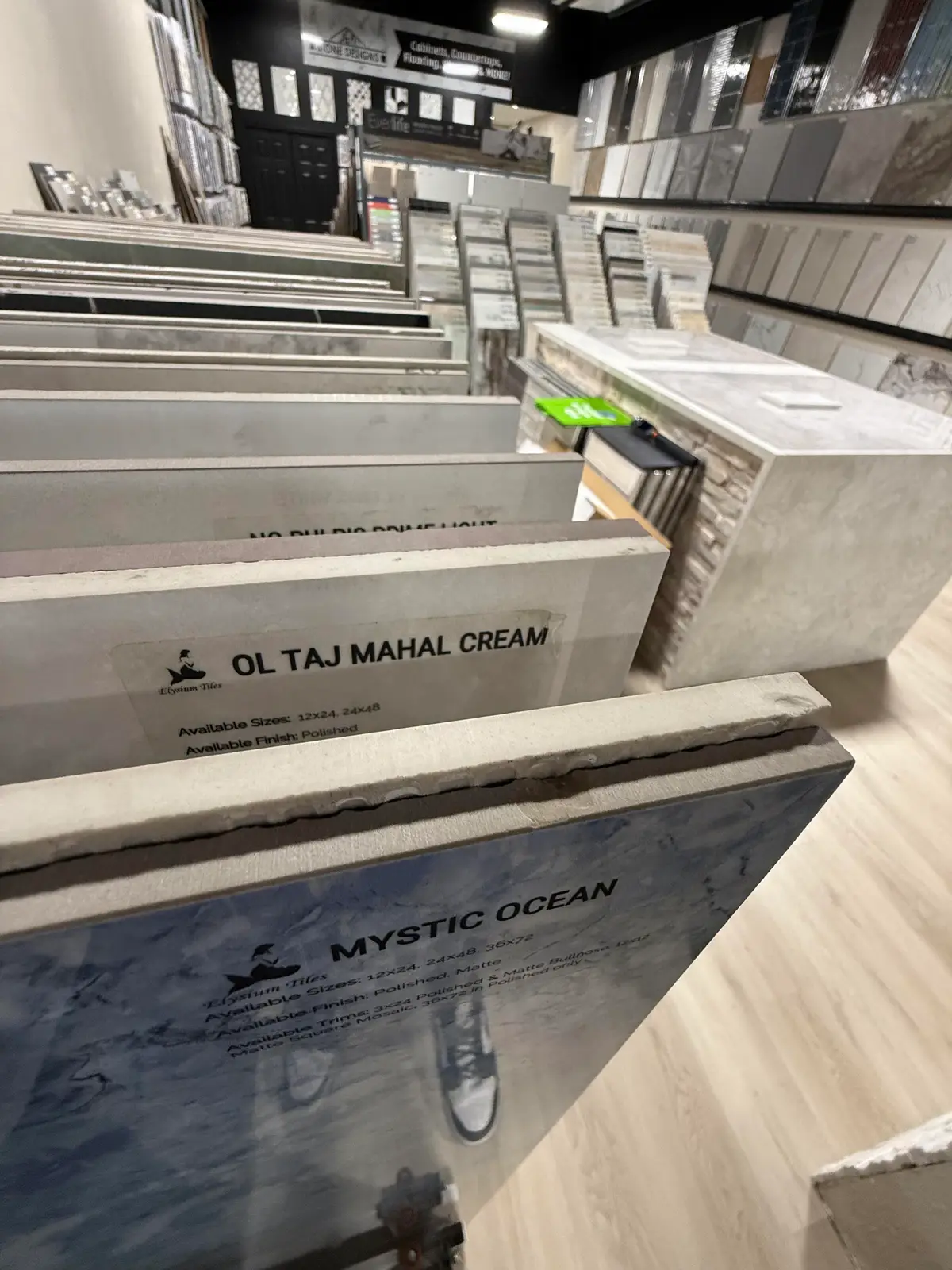
Our process runs from showroom selection to a free on-site estimate, templating, in-house fabrication and installation. You can see slabs and samples at our Auburndale and Lakeland showrooms before you commit to a finish.
Frequently Asked Questions
Are textured countertops harder to clean?
Slightly. Leathered and brushed surfaces have small valleys that can hold crumbs, so use a soft brush or microfiber cloth with mild soap and warm water. Honed surfaces are flat and wipe clean as easily as polished ones.
Does a leathered granite countertop need sealing?
Yes. Leathered granite is still natural stone, so it should be sealed and resealed periodically. The texture does not replace a sealer.
Can a polished countertop be changed to a textured finish?
Often, yes, for natural stone. The Natural Stone Institute’s consumer site notes that a fabricator can restore polished granite to a honed finish. Whether a specific installed counter can be refinished depends on the stone and its condition, so ask during your estimate.
Do honed countertops stain more easily than polished?
Generally, a honed surface takes in liquid a little more readily than the same stone polished, which is why sealing and wiping spills promptly matter more with honed natural stone. Textured quartz does not need sealing.
Which textured finish hides fingerprints best?
Leathered usually hides fingerprints, smudges and water spots best, because the texture scatters light. Brushed is close behind. Honed hides glare well but can show oily handprints until wiped.
See Textured Finishes in Person
The best way to choose between honed, leathered and brushed is to touch them. Visit our Auburndale or Lakeland showroom, or call (863) 267-4222 to book your free on-site estimate. Contact J&A Stone Designs and we will measure your space, talk through finishes for the stone you like and give you a written quote with no obligation.