
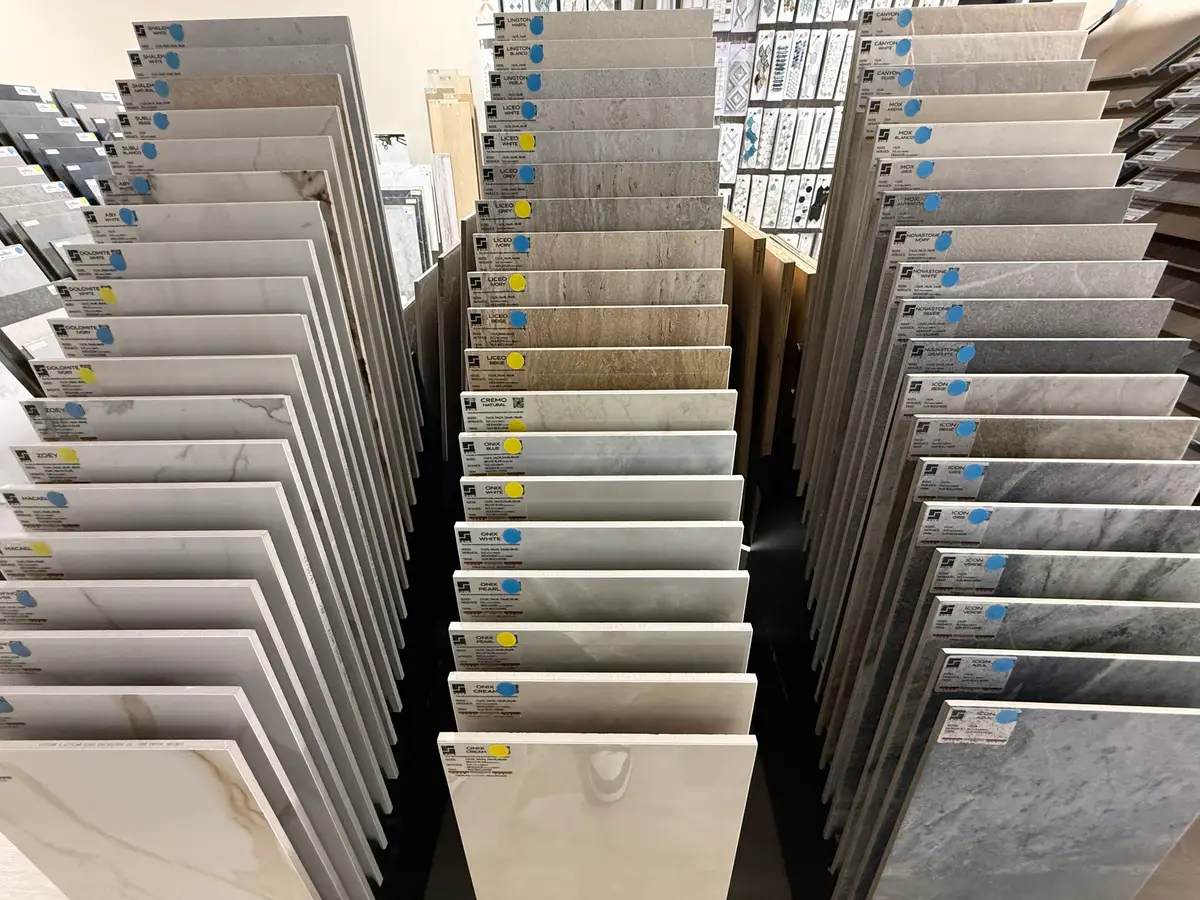
For most floors in a Lakeland home, porcelain is the better choice. It has a denser body, it absorbs far less water, and it wears better in kitchens, lanais and other high-traffic areas. Ceramic still has a place: it is right for shower walls, backsplashes, decorative patterns and lower-traffic indoor floors, and it is usually easier to cut.
That is the short answer, and it matches our default recommendation for floors. The rest of this guide explains where the difference comes from, how to tell which tile you are actually looking at, and how to match each one to the rooms in your house.
What Makes a Tile Porcelain
Porcelain and ceramic are both fired clay tiles. The industry draws a firm line between them based on one measured property: how much water the tile body absorbs.
According to the Tile Council of North America, standards define porcelain as an impervious tile with a water absorption of 0.5 percent or less, measured with the ASTM C373 test method. Tile above 0.5 percent is non-porcelain. Ceramic typically absorbs 3 to 7 percent.
That number matters more than the label on the box. The same TCNA page warns that some tile is advertised and sold as porcelain without meeting the standard. If a tile carries the PTCA mark, it has been certified as true porcelain.
Porcelain vs Ceramic, Side by Side
Here is how the two compare on the points that matter for a floor:
- Water absorption: porcelain 0.5 percent or less; ceramic about 3 to 7 percent.
- Wear: porcelain has a denser body and wears better in high-traffic areas.
- Thermal shock: porcelain resists it better.
- Cutting and setting: non-porcelain tile is usually easier to cut and bond. Porcelain is harder to cut and harder to bond, so it needs the right materials.
- Best uses: porcelain for floors, lanais, kitchens and high-traffic areas. Ceramic for shower walls, backsplashes, decorative patterns and lower-traffic indoor floors.
Why Porcelain Usually Wins on Florida Floors
Water and grout
Central Florida floors deal with humid air, wet shoes and frequent mopping. A porcelain body is essentially waterproof, so the grout joints are the only real path for water. That is why grout sealing, covered below, matters so much.
Ceramic tile is typically glazed and absorbs more water (3 to 7 percent), so we use it on walls, backsplashes and lower-traffic indoor floors rather than as our default floor tile.
Lanais and sunrooms
UV exposure, humidity swings and occasional rain ruin most flooring categories. Porcelain is not affected by them, so it is our default for lanais and sunrooms.
Wear in busy rooms
Kitchens and other high-traffic areas take the most wear, and porcelain’s denser body handles it better. TCNA notes that unglazed porcelain is sometimes called “through body” because the color goes all the way through, so it tends not to show wear. Many glazed porcelains are also very durable.
The cost gap is small
The price difference between a premium ceramic and a basic porcelain is small. Because of that, we default to porcelain for floors unless there is a specific reason to choose otherwise. Installed ranges for tile are listed on our porcelain and ceramic tile flooring page.
If you are still comparing tile against vinyl plank, engineered hardwood and laminate, our guide to the best flooring for Florida humidity covers all four.
Where Ceramic Tile Still Makes Sense
Ceramic is not a lesser product. It is the right tool for several jobs:
- Shower walls. Wall tile does not take foot traffic, and ceramic is usually easier to cut.
- Backsplashes. Another wall surface where porcelain’s extra toughness is not needed.
- Decorative patterns. Borders, inlays and accent areas.
- Lower-traffic indoor floors. A room with light foot traffic does not need porcelain’s extra wear resistance.
Some bathrooms use porcelain on the floor and ceramic on the walls. If you are planning a full bathroom project, see our bathroom remodeling services.
Glazed, Unglazed and Slip Resistance
Porcelain comes both glazed and unglazed. Per TCNA, glazed porcelain is usually a little easier to clean, while unglazed porcelain may have better slip resistance.
Tile size matters too. Large-format tiles minimize grout lines in modern kitchens and bathrooms. For shower floors and small bathrooms, smaller tiles such as mosaics give better slip resistance and easier sloping to the drain.
Installation Matters as Much as the Tile
Tile done poorly fails in predictable ways: cracked grout, popped tiles and water reaching the subfloor. The most common cause of cracking is movement underneath, either flex in a wood subfloor or settling in a concrete slab.
That is why the choice of porcelain or ceramic is only half the decision. A good installation includes:
- Subfloor assessment. We test a slab for moisture and flatness first, and add an isolation membrane where movement is likely. For more on installation, see our flooring installation and repair page.
- The right materials. TCNA notes that porcelain is harder to bond than non-porcelain tile, and that this generally makes little difference to you as long as the installer uses the right materials.
- Sealed grout. We seal all grout at install and give you a resealing schedule, typically every 1 to 3 years.
Most Polk County slab homes are excellent candidates for tile.
How to Choose for Your Rooms
A simple way to decide:
- Floors, lanais, kitchens and high-traffic areas: porcelain, our default.
- Shower walls, backsplashes and decorative patterns: ceramic is a good fit.
- Lower-traffic indoor floors: ceramic can work. Ask us about the specific tile.
- Any tile sold as porcelain: check the manufacturer’s data for water absorption, or look for the PTCA mark.
The easiest way to see the difference is in person. At our Lakeland flooring showroom you can compare tile samples side by side with luxury vinyl plank, hardwood and laminate.
Frequently Asked Questions
Is porcelain tile better than ceramic for floors?
For most floors, yes. Porcelain absorbs 0.5 percent water or less and has a denser body, so it holds up better to water and wear. Ceramic is right for walls and lower-traffic indoor floors.
How can I tell if a tile is porcelain or ceramic?
Check the manufacturer’s specifications for water absorption. True porcelain is 0.5 percent or less under the ASTM C373 test, and a PTCA mark confirms it. A label alone is not proof, because some tile sold as porcelain does not meet the standard.
Can ceramic tile be used in a bathroom?
Yes. Ceramic is right for shower walls. For floors, porcelain is our default.
Is porcelain tile good for a lanai?
Yes. Porcelain is our default for lanais and sunrooms because UV exposure, humidity swings and occasional rain do not affect it the way they affect most flooring categories.
Does tile flooring need sealing?
The grout does. Grout joints are the only path for water through a porcelain floor, so we seal all grout at install and give you a resealing schedule, typically every 1 to 3 years.
Get a Free On-Site Estimate
Choosing between porcelain and ceramic is easier with the tile in your hands and someone measuring the actual rooms. Visit the Lakeland showroom at 5259 Florida Ave S, or call (863) 267-4222 to book your free on-site estimate. We measure the space, inspect the subfloor and run a moisture test, then give you a written quote with no obligation.