A quartz fireplace surround is installed in four stages: the fireplace wall is prepared and measured, a template records its exact shape, the slab is cut and finished in a fabrication shop, and the finished pieces are bonded and supported on the wall. Most of the work happens before anything is glued. The two decisions that matter most are how close the quartz sits to the heat and where the seams go.
If you are still deciding whether quartz is right for your fireplace at all, start with our guide to quartz fireplace surrounds and the styles they suit. This post picks up where that one stops and walks through what actually happens from the first visit to the finished wall.
Before Template Day: Getting the Fireplace Ready
A surround is cut to fit the wall and firebox as they are on the day of measuring, so the space needs to be close to finished first.
Settle the firebox and insert
If you are adding or replacing a gas insert, an electric unit or a new firebox, it should be in place, or at least the final model chosen with its installation manual in hand. The manual lists the clearances the manufacturer requires around the opening, and those numbers decide where the quartz can start. Changing the unit after the stone is cut usually means recutting.
Finish the wall behind it
Quartz is heavy, and it needs a flat, solid surface to bond to. Old tile or loose stone veneer generally has to come off, and the wall behind should be sound and true. Your general contractor or remodeler handles framing and wall board; we coordinate with them so the wall is ready when we come to measure.
Plan power, TV and mantel
Decide now where outlets, switches, a TV mount or media cables will land, and whether you want a mantel shelf, a hearth or both. Every opening has to be cut in the shop, so it needs to be on the template. On our original fireplace post we note that we work with your contractor or designer on timing, electrical access and wall prep for exactly this reason.
Heat: Where Quartz Can and Cannot Go
This is the part to get right before anything else. As our quartz countertops page explains, engineered quartz is made from ground natural quartz bound with polymer resins. Those resins are what make it non-porous and easy to clean, but they also limit heat. Our quartz page puts it at about 300°F before the binders begin to discolor or weaken, and it notes that rapid or sustained heat can cause cracking.
That does not rule quartz out for a fireplace. It means:
- Keep quartz out of direct flame and off the firebox face where the metal or glass gets very hot. A noncombustible border, trim kit or a strip of a more heat-tolerant material often sits between the opening and the quartz.
- Follow the appliance manual’s clearances. Gas and electric units differ, and so do models within each type. The manufacturer’s numbers come first.
- Check local code. Fireplaces and chimneys are covered by building codes and by NFPA 211, the national standard for chimneys, fireplaces and vents. Your fireplace installer or local building department can confirm what applies to your unit.
If you burn wood often, or the surround needs to sit right at the opening, ask us about porcelain slab. Porcelain is fired at very high temperatures during manufacturing and contains no resins, and our porcelain page notes that manufacturers commonly list porcelain slabs for fireplace surrounds depending on product and thickness. Some homeowners pair the two: porcelain close to the fire, quartz on the wider wall.
Template Day: Measuring the Wall
A fireplace wall is rarely perfectly flat or square. Template day captures it as it really is.
In a kitchen, our shop uses digital templating: a digital template tool captures wall variation, cutouts and overhangs on-site, and the file goes straight to the shop’s cutting system. The same idea applies to a fireplace. The template records:
- The exact opening of the firebox and any trim or border around it
- The height and width of each leg and the header above the opening
- Any out-of-plumb or out-of-square spots in the wall
- Outlet, switch and cable locations
- The hearth footprint and mantel shelf depth, if you are adding them
This is also when we talk through seam placement. A surround that reaches the ceiling, or a wide hearth, may need more than one piece. Seams are placed with sight lines, slab size, pattern direction and support points in mind, the same way we plan them on a kitchen island. On a veined quartz, we lay out the pieces so the pattern runs as smoothly as the slab allows across the joint.
In the Shop: Fabrication
Every quartz surround we install is cut, edged and finished in our own fabrication shop in Auburndale. As our countertop fabrication page describes, diamond-tipped, water-cooled saws cut the slab to template, edges are shaped and polished by our own crew, and the shop foreman checks each piece against the original template before it leaves.
For a fireplace, that usually means:
- Cutting the legs and header so they meet cleanly at the corners, often with a mitered or butted joint
- Shaping exposed edges to match the rest of the room; an eased or mitered edge is common on modern surrounds
- Cutting outlet and switch openings where the template shows them
- Fabricating the hearth and mantel shelf, if part of the job, so their edges match the surround
Typical fabrication for quartz is 5 to 7 business days. We confirm the schedule for your project with your estimate.
Install Day: Fitting the Surround
On install day the crew dry-fits each piece first to confirm it sits flat and lines up with the opening and with its neighbors. Small adjustments happen here, before any adhesive goes on.
Once the fit is right, the pieces are bonded to the prepared wall with an adhesive suited to stone and quartz. Heavy pieces, such as tall legs, a header spanning a wide opening or a projecting mantel shelf, are held and supported while the adhesive cures, and a mantel shelf or hearth that overhangs needs proper support underneath. Seams are filled and color-matched, the surface is cleaned, and the crew walks the finished wall with you.
A quartz surround needs very little care after that. Quartz is non-porous and does not need sealing, so soot and dust wipe off with mild soap and water. Avoid harsh cleaners, and keep hot fireplace tools off the quartz. The National Fire Protection Association recommends having chimneys and heating equipment cleaned and inspected every year by a qualified professional, which is a good habit whatever the surround is made of.
Frequently Asked Questions
Can quartz be used around a gas fireplace?
Often, yes, as long as it stays outside the clearances in the gas unit’s installation manual and is kept off the hottest surfaces around the opening. Quartz is heat resistant, not heat proof, so the layout matters more than the material.
Do I need a contractor as well as a fabricator?
Usually. Firebox and gas work, wall framing and electrical belong to licensed trades. We template, fabricate and install the quartz, and we coordinate timing with your contractor so the wall is ready when we measure.
How long does a quartz fireplace surround take?
Template day comes once the wall and insert are ready. Typical fabrication for quartz is 5 to 7 business days, and installation follows once the pieces pass their final check. We confirm the full schedule with your estimate.
Will there be seams in my surround?
It depends on the size. Many surrounds are cut from one slab with joints only at the corners. A full-height wall or a wide hearth may need a seam, and we plan where it goes before cutting.
Can I choose the exact quartz before it is cut?
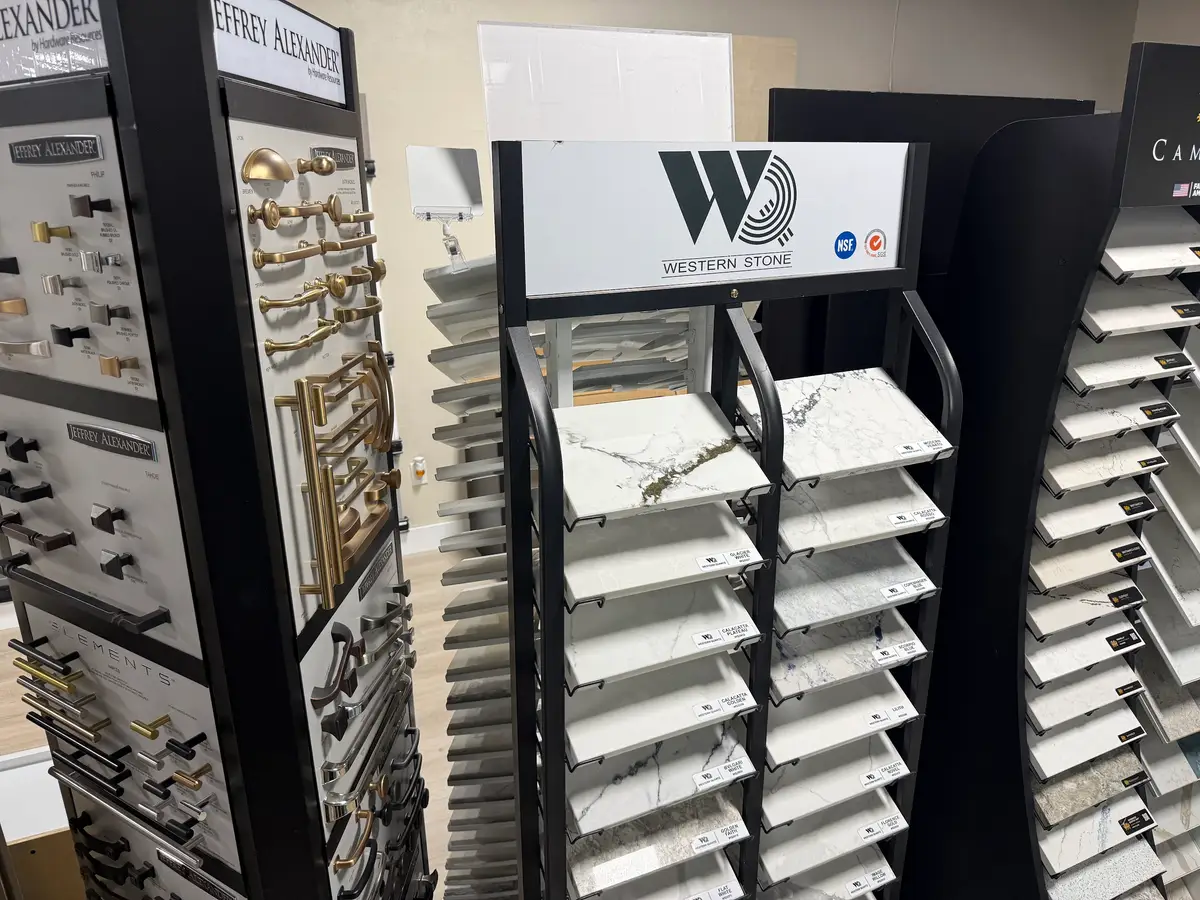
Yes. You can compare quartz samples at our Auburndale showroom before you decide, and we confirm the layout with you before fabrication starts.
Plan Your Fireplace Surround
The easiest way to start is to have us look at the wall. Call (863) 267-4222 or contact J&A Stone Designs to book your free on-site estimate. We will measure the fireplace, talk through heat clearance, seams and finish, and give you a written quote with no obligation.